.png)
 4 months ago
50
4 months ago
50
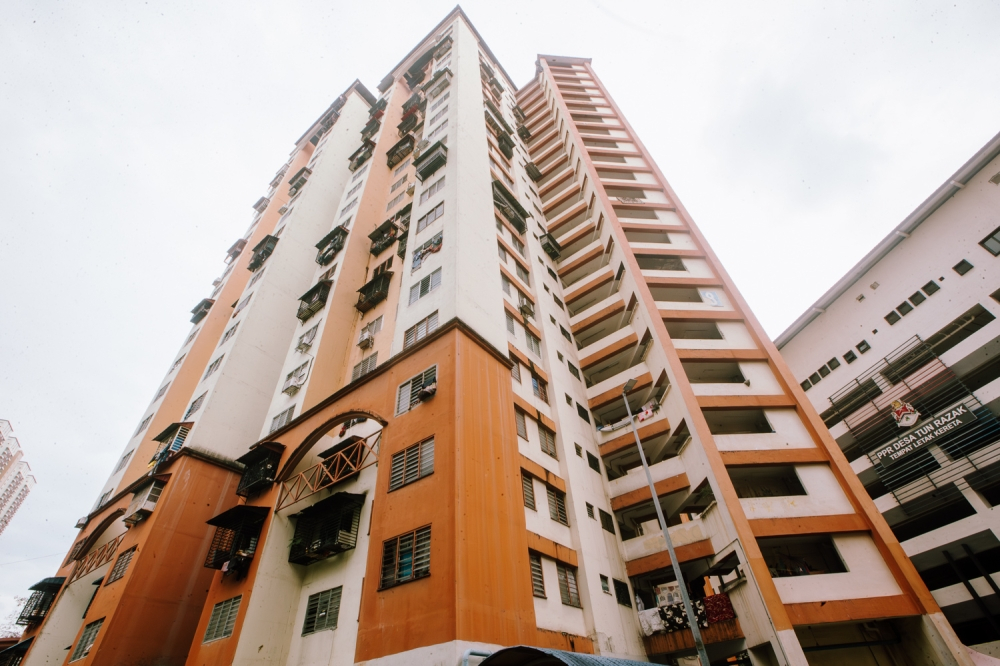
The report said the rental rate in PPRs managed by DBKL would have increased to RM312.15 today, if the rental rate had kept pace with inflation rate. — Picture by Raymond Manuel
(New users only) It's tax relief season! Get up to RM300 when you save with Versa! Plus, enjoy an additional FREE RM10 when you sign up using code VERSAMM10 with a min. cash-in of RM100 today. T&Cs apply.
By Dhesegaan Bala Krishnan
Tuesday, 26 May 2026 7:00 AM MYT
KUALA LUMPUR, May 26 — Stagnant rental rates and rental arrears amounting to millions of ringgit have rendered public housing in Malaysia unsustainable, a report by Think City said recently.
The report, titled “From Roof to Resilience”, pointed out that the Kuala Lumpur City Hall (DBKL) had maintained the rental rate at RM124 per month since the People’s Housing Projects (PPR) scheme was introduced nearly 20 years ago.
The report said the amount would have increased to RM312.15 today, if the rental rate had kept pace with inflation rate.
Consequently, DBKL has been spending more than it makes to operate and maintain PPRs under its purview.
Citing news reports, Think City’s report highlighted that DBKL spent RM164.08 million to sustain the management cost of public housing — more than seven times of its rental collection that stood at RM21.7 million. Nearly RM50 million was spent additionally for the maintenance, upgrading and renovation of PPRs.
“For DBKL sites, for example, the official monthly rent of RM124 per unit since 1998 has been insufficient to cover the cost of basic maintenance, which is estimated at RM250.
“This monthly cost goes up to RM300 when major repairs such as broken lifts and burst pipes are factored in,” the report noted.
Further straining DBKL’s cash flow is the rental arrears that has piled up to a whopping RM60 million as of July 2024.
Rental collections at nine out of the 10 PPR complexes surveyed stood below 70 per cent. Eight of these PPRs are located in the capital and are managed by DBKL.
Subsequently, public housing managements are unable to provide timely and quality upkeep and maintenance services for PPR residents, resulting in disdain towards the management among residents.
Nearly one-third of PPR residents polled expressed their dissatisfaction with their respective managements, with the percentage climbing to 37.5 per cent in one site.
Similarly, nearly one-third of respondents said they were unhappy because their respective managements were not willing to take their complaints and many felt they had no proper channel to convey their ideas to improve their PPRs.
Overall, more than half of the 3,000 PPR residents polled felt that their public facilities have either stagnated or continues to deteriorate with time.
Eight out of the 10 PPRs surveyed had damaged walls with only two sites having well-maintained floor tiles and only one apartment complex had a usable courtyard.
Sadly, all ten sites had poor accessibility for persons with disabilities (PWDs).
Therefore, Think City has urged the government to set up a high-level task force to conduct a rapid assessment to all public housing projects and to propose a new financial model for public housing.
It also pushed for the creation of a new incentive framework for PPR management staff, which include performance-based rewards as well as training and career development opportunities.






 English (US) ·