.png)
 1 hour ago
2
1 hour ago
2
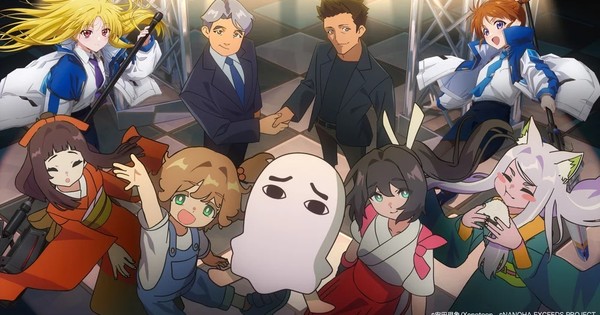
Patlabor EZY makes giant robots as boringly mundane as possible—and therein lies its brilliance. This is a world where giant robots are as commonplace as any other piece of large construction equipment. Of course, some use them for crimes (Google “Killdozer” if you want a real-world example), and so the police need to be able to respond in kind. The trick is that Patlabor EZY plays the concept completely straight.
There are no battles where mecha are crashing into buildings or wildly shooting at each other. After all, should that happen, the officers of Division 2 would have failed in their jobs spectacularly. Just like in a real-world car chase, their mission is to prevent property damage and save lives. This grounded approach to the story gives the adventures seen in Patlabor EZY's first film a sense of reality present only in a scant few mecha anime—most of those being the previous Patlabor anime.
Of course, it's not just in the action scenes where the grounded approach to storytelling succeeds. It makes sense, given the setting, that Tokyo needs a rapid-response Patlabor team on standby at any given moment—as not doing so could lead to loss of life, not to mention millions in damages. This means not only mecha pilots but also team commanders, drone pilots, logistics handlers, support vehicle drivers, and an entire army of maintenance staff to keep the team's two Patlabors in working order.
However, it's not like Labor crime is a daily occurrence. While the first of the film's three stories involves a pair of disgruntled elders hijacking a Labor in a covered shopping street, this is the exception, not the rule, when it comes to Division 2's daily lives. Once the reports are written and the maintenance done, our heroes do an awful lot of sitting around.
The second episode of the film is centered around one such dry spell. Bored senseless, Touwa, our pilot heroine, begins writing up a fake after-action police report. It's basically fan fiction about her and the rest of the team being called out on an exciting mission. However, when she is called away to do other work, the rest of the cast come across the incomplete log one by one, continuing the story in their own ways. What starts as a grounded Patlabor story where the major problem is bridge clearance for their mecha-carrying trucks becomes decidedly less so with each new author.
How the story changes and evolves depends on who's writing it—which, in turn, gives us a peek into each character's head and how they view not only their place on the team but also their coworkers. This is a fantastic way of fleshing out the supporting cast. It's also hilarious, acting as both a parody and a love letter to the mecha genre in general.
The third story of the film is another “downtime” episode. Like how Hollywood movies often contract with the armed forces for the use of planes, ships, or other military equipment, or have police oversight when using real weapons, Division 2 is called to a film set to oversee the use of several custom Labors being used in the film. Simply put, the director is against using CG or tokusatsu suit actors in his film; he wants practical effects. He's also a by-the-seat-of-your-pants filmmaker who cares little for things that get in the way of his vision—like actor safety or the film's plot and lore.
Much as the previous episode took the piss out of mecha anime, this one does the same for the movie-making process—basically making fun of sets where everyone is a diva following (or fighting against) a madman, and it falls on the calm, responsible ones to make sure that everything doesn't end in disaster. It is, as you might expect, quite funny in its own right.
The anime also looks well above average. The episodes are filled with both diverse-looking characters and ultra-detailed mecha designs. The 2D and 3D animation used for each are merged perfectly—it's truly difficult to tell where one ends and the other begins. And thanks to the inclusion of the story-within-a-story, the animators get to show their chops doing both mecha grounded in realism and mecha not even familiar with the word.
The music is likewise enjoyable. While I wouldn't have expected a Mori Calliope song to act as the opening theme of a series steeped in so much '80s/'90s nostalgia, it works (and it also helps that it's a darned catchy song to boot). That said, '80s/'90s pop star Mariko Nagai's ending song very much fits that nostalgia mold and is an equally enjoyable listen.
In the end, this first Patlabor EZY film is a thought experiment above all else. It wants you to think about mecha not as heroic machines but rather as bulldozers. It wants you to see mecha pilots as people trying to balance public safety, property damage, government bureaucracy... and the fact that they're piloting a giant robot with an equally giant freaking revolver. (How cool is that!?) It shows the Patlabor police as a group of eccentric oddballs but also as the exact kind of people you want doing this job—i.e., people who truly want to get the job done with the minimum amount of damage to all involved, including the criminal.
If I have one complaint with this film, it's that, despite the second story's clever storytelling, the characters remain rather one-note. However, with seven more Patlabor EZY films in the pipeline, I have little worry that this will be rectified sooner or later.




 English (US) ·