.png)
 1 hour ago
2
1 hour ago
2
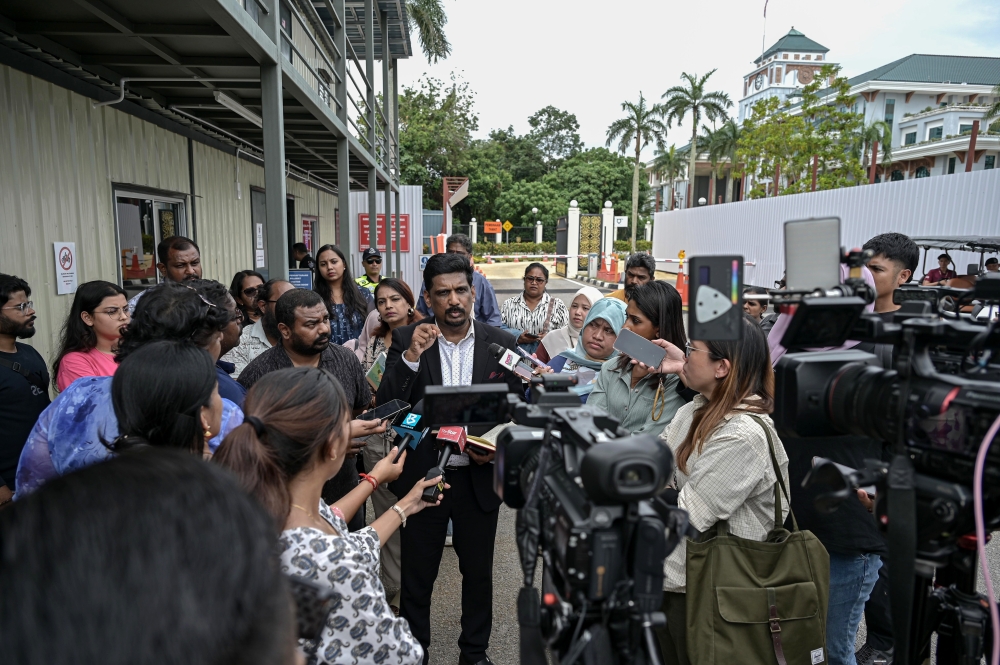
PUTRAJAYA, Sept 27 — Families of 55 Malaysians still missing following the flash flood in Nepal have urged the government to consider a special moratorium on the victims’ financial commitments, as their families are now facing difficulties accessing the victims’ accounts and assets, insurance coverage, and managing their loans.
Malaysia Solidarity: Families in Hope (MASFIH) spokesperson Dr Manivannan Rethinam said that after 33 days without certainty, financial and legal issues have become among the most pressing concerns for the families, particularly as some of the victims were the main breadwinners.
He explained that the moratorium requested was not for all family members but specifically for financial commitments involving the 55 individuals who remain missing.
“We do not need to wait for the Nepalese government. There are many things we can do in Malaysia now. What we are asking for is a special moratorium for the 55 missing individuals, covering all financial commitments under their names or related to them.
“This will help the families cope until death certificates are issued and insurance claims and estate matters can be settled,” he told reporters after attending a more than four-hour meeting between the next of kin and government agencies at Wisma Putra here today, involving about 105 people.
The session, which began at about 10.15 am and ended around 3 pm, included briefings on search and rescue (SAR) operations, the management of deoxyribonucleic acid (DNA) samples, as well as legal and documentation processes involving the individuals who remain missing.
Manivannan said the victims’ status as missing persons had placed various constraints on their families, as assets and financial commitments under their names could not be managed as usual.
These included bank accounts, vehicle and housing loans, company interests, and life and travel insurance claims.
He said some families wanted to return their vehicles because they could no longer afford the payments, but faced difficulties because the vehicles were registered in the missing individuals’ names.
As such, MASFIH wants to hold a meeting with Bank Negara Malaysia, the Attorney General’s Chambers (AGC) and relevant agencies to seek a specific mechanism to resolve the issues faced by the families.
Manivannan said the families have also sought a meeting with Prime Minister Datuk Seri Anwar Ibrahim to enable a comprehensive solution to be coordinated at the highest government level.
He said the families appreciated the Prime Minister’s earlier move to contact his counterpart Balendra Shah regarding efforts to establish a special mechanism to address the issue, but believed that several measures could be implemented in Malaysia without having to wait for a decision by the Nepalese government.
On efforts to identify the victims, Manivannan said the families were informed that the Royal Malaysia Police (PDRM) had obtained 98 DNA samples from next of kin, all of which had been processed by the Department of Chemistry Malaysia as of Sept 24.
He said the process, which normally takes longer, had been expedited to enable matching to be carried out should any bodies be found.
He said three DNA profiles had also been sent to China following information that three of the missing Malaysians had immigration-related records in the Tibet area.
MASFIH, however, urged that the possibility of sending DNA profiles of other members of the same group also be considered if there was evidence that they had been in the area.
According to Manivannan, representatives of the Malaysian Embassy in Beijing had informed them that if families had information indicating that other individuals were also there, the matter could be discussed with the Chinese authorities.
He said the families had also asked PDRM and the Department of Chemistry to reassess whether the DNA samples obtained from each family were sufficient to establish stronger matches.
Manivannan also said the families appreciated the efforts of the relevant teams in explaining the challenges and search operations being conducted in Nepal.
However, the families questioned why the Malaysian team’s operations could not focus on the Rasuwagadhi area near the Nepal-Tibet border, which was believed to be the last known location of some of the missing Malaysians before contact was lost.
According to him, the families were informed that the areas covered by the Malaysian team’s operations were determined based on permission from the Nepalese authorities, while access to certain areas was beyond the control of the SMART team.
He said the families were also informed that there remained a possibility that victims could be found alive if they were in remote areas or villages, although the possibility was considered very slim.
Manivannan said the families were also informed that the Nepalese government was considering ending the SAR phase and moving into the recovery and reconstruction phase, although no date had been set.
At the same time, he said, the Nepalese authorities were working to expedite the DNA matching process, while discussions were also ongoing on documentation mechanisms relating to disaster victims, adding that the families now needed not only information on the search operations but also a clear direction to address the long-term impact. — Bernama







 English (US) ·