.png)
 12 hours ago
1
12 hours ago
1

Registered Dietitian Nutritionist
Image by CAMERON WHITMAN / Stocksy April 18, 2026 When it comes to eating for long-term health, we tend to zero in on specific foods. Should I be eating more blueberries? Is salmon really that important? What about leafy greens? But research continues to show that what matters most is dietary patterns over time, including for breast cancer risk. A recent study1 found that women who ate a wider variety of foods across major food groups had significantly lower odds of breast cancer compared to those with less dietary diversity. And the relationship was dose-dependent, meaning the more variety, the lower the risk. Here's what you need to know (and easy tips for bringing a bit more novelty to your plate). 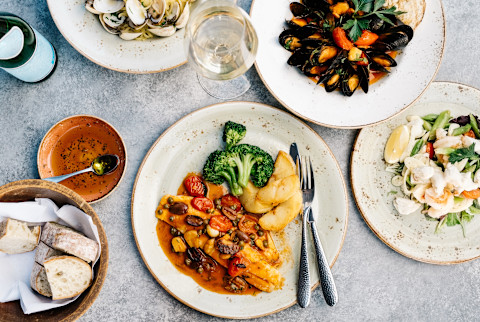
About the study
Researchers set out to examine whether diet diversity (not just the quality or quantity of food, but the variety) was linked to breast cancer risk in women.
Researchers analyzed data from 600 women with newly diagnosed breast cancer and 600 women without breast cancer, comparing their eating patterns over the previous year. They scored each participant’s diet using a dietary diversity score (DDS), a measure of how many different foods people consumed across five major food groups. Scores ranged from 0 to 10, with higher scores reflecting greater variety.
To get a clearer look at the impact of diet, the researchers accounted for factors that can influence breast cancer risk (such as age at first menstruation, menopause status, education, multivitamin use, and history of benign breast conditions).
Greater diet diversity was linked to up to 59% lower odds of breast cancer
Women who ate the most varied diets had up to 59% lower odds of breast cancer compared to those with the least variety. And women with moderate dietary diversity had about a 42% lower odds of breast cancer compared to those with the lowest diversity.
This patterns shows that risk declines stepwise as dietary variety increased.
- Fruits and vegetables: Not just apples and spinach, but berries, citrus, cruciferous veggies, root vegetables, and leafy greens
- Proteins: Rotating between fish, poultry, legumes, eggs, and plant-based options
- Grains: Mixing up rice, oats, quinoa, farro, and whole wheat
- Dairy or alternatives: Yogurt, cheese, milk, or fortified plant-based versions
How to add more variety to your plate
If your meals have been on repeat lately, here are a few simple ways to mix things up (even without fully deviating from your favorite meals).
- Add one new produce item to your cart each week: Try a different color of bell pepper, a new leafy green, or a fruit you haven't had in a while. And always keep some frozen produce on hands (peas, green, beans, onions, etc.) that you can add to last-minute meals.
- Rotate your proteins: If chicken is your go-to protein, swap in fish, tofu, or eggs a few times a week.
- Experiment with grains: Trade your usual rice for farro, quinoa, or barley. Each brings a slightly different nutrient profile.
- Try one new recipe per week: This naturally introduces new ingredients and flavor combinations.
- Shop seasonally: What's in season changes throughout the year, which can nudge you toward variety without much extra effort.
The takeaway
By gradually expanding the range of foods you eat, you're giving your body a broader spectrum of nutrients and protective compounds. And according to this study, that diversity may play a role in long-term breast cancer risk.






 English (US) ·