.png)
 3 hours ago
1
3 hours ago
1
Retail investors plowed $5.7 billion into stocks between April 9 and 15, the week when the S&P 500 came roaring back to crest over 7,000, according to Arun Jain and his colleagues at J.P. Morgan. That’s still below the 12-month average of $6.6 billion per week.
There is more room for that trend to run, according to Adam Turnquist of LPL Financial. “Institutional investors have been rebuilding long equity exposure following heavy short positions last month. Meanwhile, retail investors have largely remained on the sidelines during this recovery, leaving the window open for potential fear-of-missing-out inflows back into U.S. equities,” he said in an email sent to Fortune.
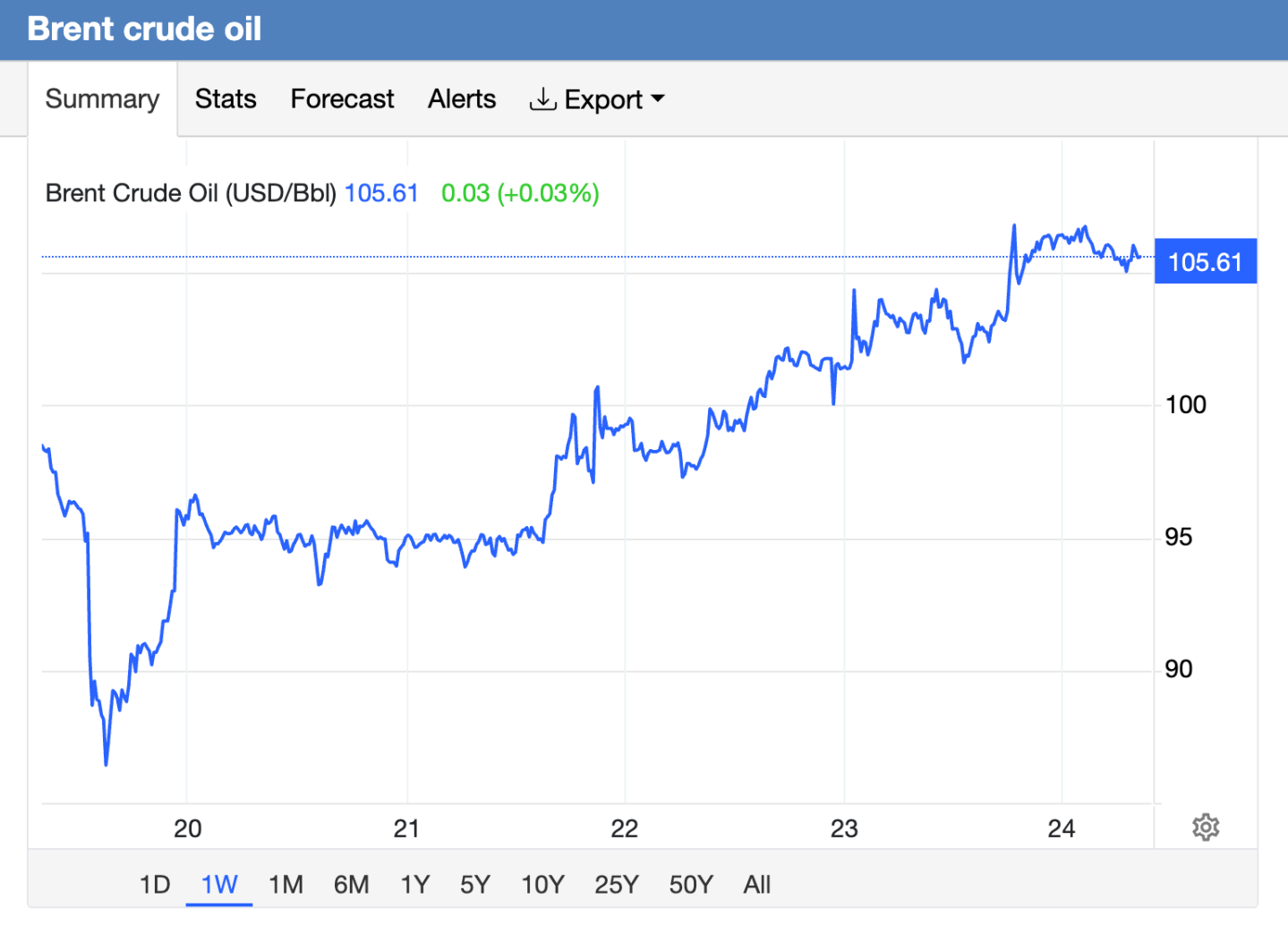
Chart from TradingEconomics.com.
ONE BIG THING
California faces summer jet fuel crisis if war drags on
Europe and Asia face widespread fuel shortages this summer as the war in the Middle East drags on, but shortfalls—especially for jet fuel—will soon spread to California and the broader west coast of the U.S. While the U.S. leads the world in crude oil production, California essentially operates as an island sandwiched between the Pacific Ocean on one side and mountainous terrain on the other. California thus imports a lot of its oil, gasoline, diesel, and jet fuel from Asia—a region that is itself currently struggling with shortages because of its reliance on the Middle East.
“If we don’t have some concrete [peace] deal here in the next three weeks, then I’m really nervous for the West Coast this summer in terms of jet fuel,” Patrick De Haan, head of petroleum analysis at GasBuddy, told Fortune’s Jordan Blum. “That’s not going to be great for California’s economy.”
IRAN
Trump signals he’s in no rush to end the Iran war
President Trump said the fragile ceasefire between Israel and Lebanon will be extended a further three weeks. In posts on social media and while taking questions from the press, the president hinted that the war with Iran will not be resolved soon. “I have all the time in the World, but Iran doesn’t — The clock is ticking!” he said on Truth Social. At an event yesterday, he said, "If they don't want to make a deal, then I will finish [the war] up militarily." And, "I don't want to rush myself."
Hurry up and wait. He also acknowledged that Iran has yet to get back to him. “Iran is having a very hard time figuring out who their leader is! They just don’t know!”
The state of the Strait. And, of course, the Strait of Hormuz remains at a standstill, the president confirmed. “I have ordered the United States Navy to shoot and kill any boat, small boats though they may be (Their naval ships are ALL, 159 of them, at the bottom of the sea!), that is putting mines in the waters of the Strait of Hormuz. There is to be no hesitation. Additionally, our mine ‘sweepers’ are clearing the Strait right now.”
- Bottom line: The signals suggest that the timeframe for ending the war is getting longer.
BIG TECH
Jabil’s shareholders are mad at the company—but the board is ignoring them
Jabil, the Florida-based tech-hardware-maker (No.148 on the Fortune 500), appears to be at war with its own shareholders. The company’s board did not accept the resignations of two of its directors who were voted out by shareholders at the company's annual meeting in January, according to an SEC filing spotted by Fortune’s Amanda Gerut. On April 22, the board rejected the resignations of John Plant and N.V. "Tiger" Tyagarajan, despite 84% of shareholder votes cast against Plant and 70% against Tyagarajan. Neither director attended 75% of the board's 14 total meetings in fiscal 2025 due to "coinciding professional responsibilities." Plant's pay for board service last year was $330,624 and Tyagarajan's was $333,028.
- Meta to lay off 8,000 as part of AI efficiency push - Axios
- Strategy’s teetering financial tower - FT
MORE FROM FORTUNE
Intel CEO Lip Bu Tan crushed Wall Street targets on his 1-year anniversary: We are embracing our ‘paranoid’ roots - Alexei Oreskovic
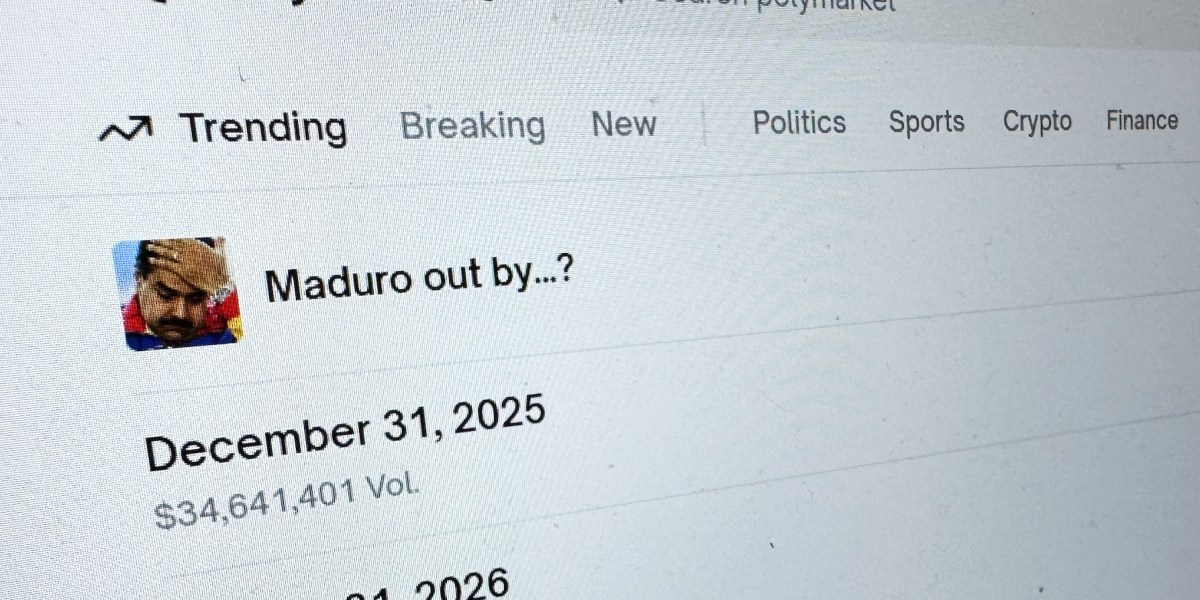
Feds charge U.S. Army soldier who made $400,000 from Polymarket bets tied to Maduro capture - Jeff John Roberts
Fewer than 1 in 4 workers feel their job is safe. Here’s why worker ‘FOBO’—fear of becoming obsolete—is hurting companies - Claire Zillman
Tesla stock dives on news that it earned next to nothing on cars in Q1, and plans to spend $25 billion in CapEx anyway - Shawn Tully
Ken Griffin’s Citadel fires back at NYC Mayor Zohran Mamdani ‘tax the rich’ video featuring his $238 million penthouse - Catherina Gioino
JOBS
The mass unemployment everyone feared is still missing
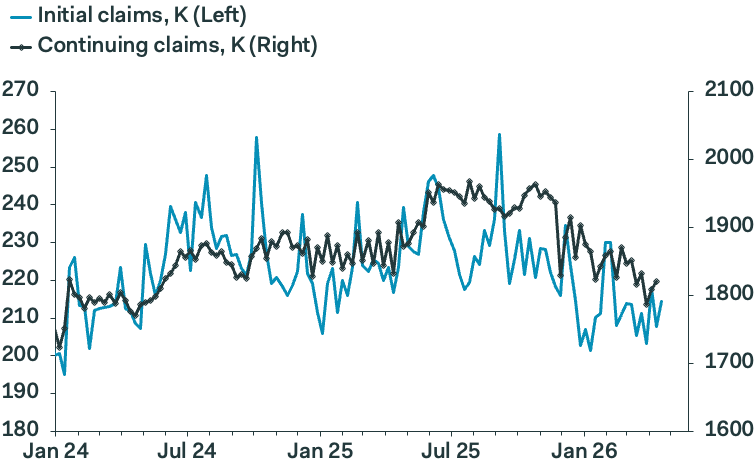
Initial jobless claims rose to 214,000 in the most recent week surveyed but the overall trend remains down and Wall Street is slightly puzzled as to why. With the uncertainty caused by the war with Iran, the price of oil going through the roof, and tariffs complicating company supply chains, analysts expected the labor market to get weaker. But it’s isn't. Unemployment is simply refusing to show up. Employers are reluctant to hire people and workers are reluctant to leave their jobs—but that isn’t generating mass joblessness, according to recent notes from Piper Sandler, Jefferies, and Pantheon (which supplied the above chart).
CHART OF THE DAY
Seven global chokepoints that matter even more than the Strait of Hormuz
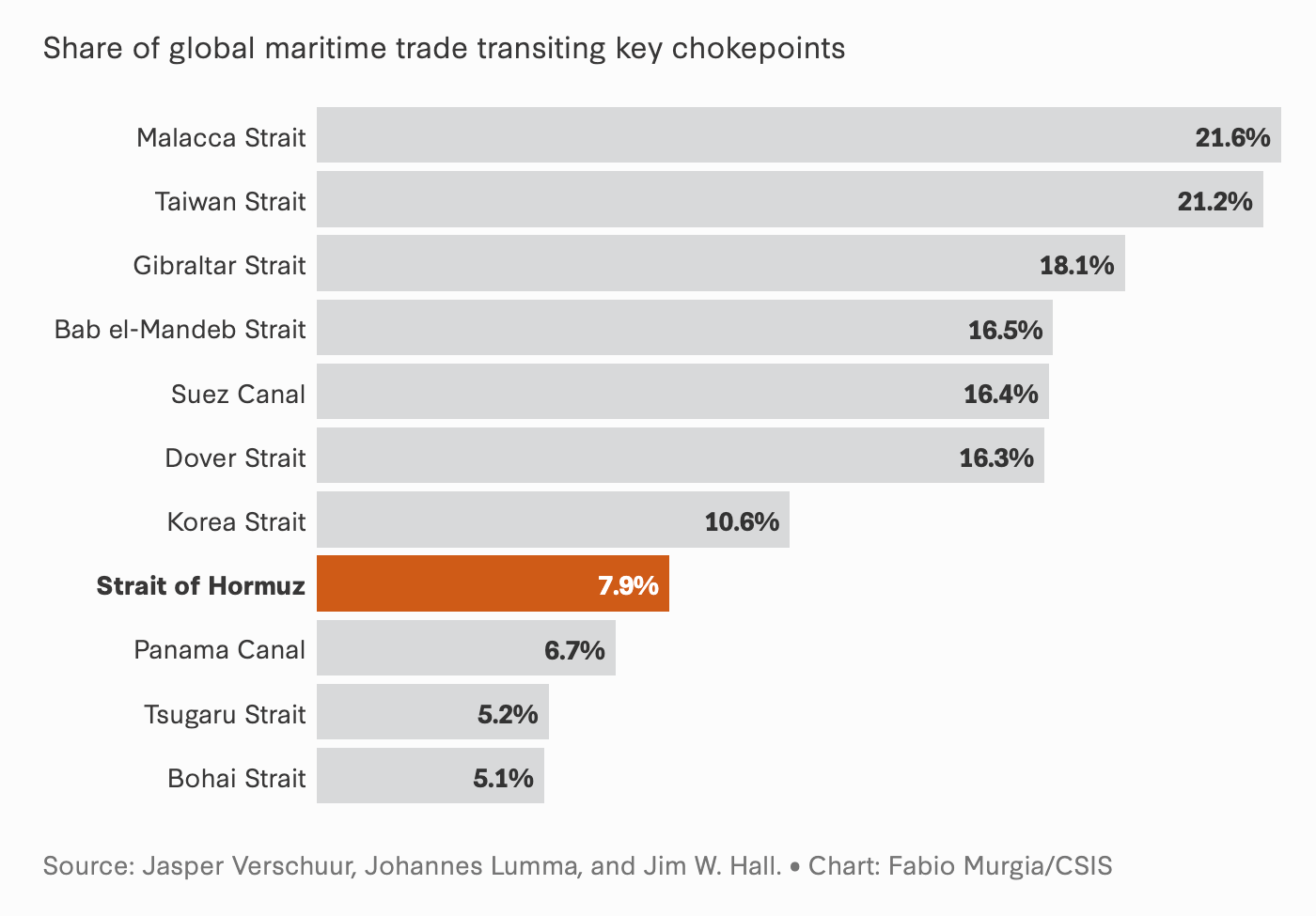
You have probably heard that the Strait of Hormuz carries about 20% of the world’s supply of oil. But did you know it is also a major route for all trade goods? About 8% of all traded goods normally go through the Hormuz. This chart from CSIS shows that there are seven other straits through which a much larger percentage of trade passes. Three of those—the Taiwan Strait, Bab el-Mandeb Strait, and the Suez Canal—are potential conflict zones. In fact, if China attacked Taiwan, it would affect 21% of all world trade. There’s a useful map of the world’s critical chokepoints here.
NUMBER OF THE DAY
13 million
The daily shortfall in millions of barrels of oil, caused by the Iran war, in a world that demands 102 million barrels per day. Global oil inventories—strategic reserves and private storage supplies—will be fully depleted by the second week in May, according to J.P. Morgan analyst Joyce Chang. At that point, the price of oil could rise to $150-$200 per barrel as “physical supply constraints and forced demand destruction would become the central dynamic,” Chang advised clients.
THE FRONT PAGES TODAY
Price of access to Trump’s memecoin VIP reception plunges - FT
China’s DeepSeek releases preview of long-awaited V4 model as AI race intensifies - CNBC
Inside the Navy Secretary’s Last-Ditch Bid to Save His Job - Axios
US-Sanctioned Supertanker With Iranian Oil Tries Hormuz Transit - Bloomberg
Elon Musk and Sam Altman’s Epic Fight Heads to Court - NYT
With jaw-dropping $1 trillion valuation, Anthropic overtakes OpenAI in market cap race - NY Post
ONE MORE THING
Donald Trump Jr.’s big bet on Polymarket
Donald Trump Jr. has a stake in Polymarket (the company is valued at $9.6 billion) via his partnership in a VC fund that backs it, and is an adviser to Kalshi. Both companies have benefited greatly from the Trump administration’s pro-prediction market stance via its various regulatory agencies. And both have benefited from President Trump’s wildly unpredictable decision-making processes: For instance, Polymarket hosted 413 million bets on the Iran war, totaling more than $100 million, over a recent three-day period monitored by the Associated Press.
It’s not all milk and honey for the Trumps, however. The Polymarket contract for bets on whether the president will be impeached stood at 66% yesterday.






 English (US) ·