.png)
 38 minutes ago
2

KUALA LUMPUR, Nov 16 — You see it every month on your payslip: a small deduction labelled Socso, amounting to just a few ringgit.
For some, they know that it is another statutory deduction made alongside their Employees Provident Fund (EPF) contributions and income tax.
But not many know exactly what that money pays for.
Unlike EPF, which primarily helps Malaysians build retirement savings, the Social Security Organisation (Socso) or Perkeso (Pertubuhan Keselamatan Sosial) as it is sometimes referred to, provides protection against employment-related accidents, occupational diseases, permanent disability and certain other circumstances, depending on the scheme and eligibility requirements.
With Budget 2027 introducing new incentives to expand social protection among gig workers and the self-employed, you may want to pay attention to some of these changes.
Here is how Socso works, what is new and what to look out for.
What is Socso?
Socso is essentially designed to provide financial assistance, medical care and rehabilitation to eligible workers when circumstances affect their ability to earn a living.
For employees in the private sector, contributions are generally shared between employers and employees.
Under the standard First Category contribution scheme, which generally covers employees below 60 years old, employers contribute 1.75 per cent of an employee’s monthly wages while employees contribute 0.5 per cent, according to the prescribed contribution schedule.
This means the contribution is not borne entirely by workers, with employers paying the larger share.
The money goes towards financing social protection benefits rather than being accumulated in an individual savings account like EPF.
Socso administers several protection schemes, including the Employment Injury Scheme, Invalidity Scheme and the newer Non-Employment Injury Scheme, known as Lindung 24 Jam.
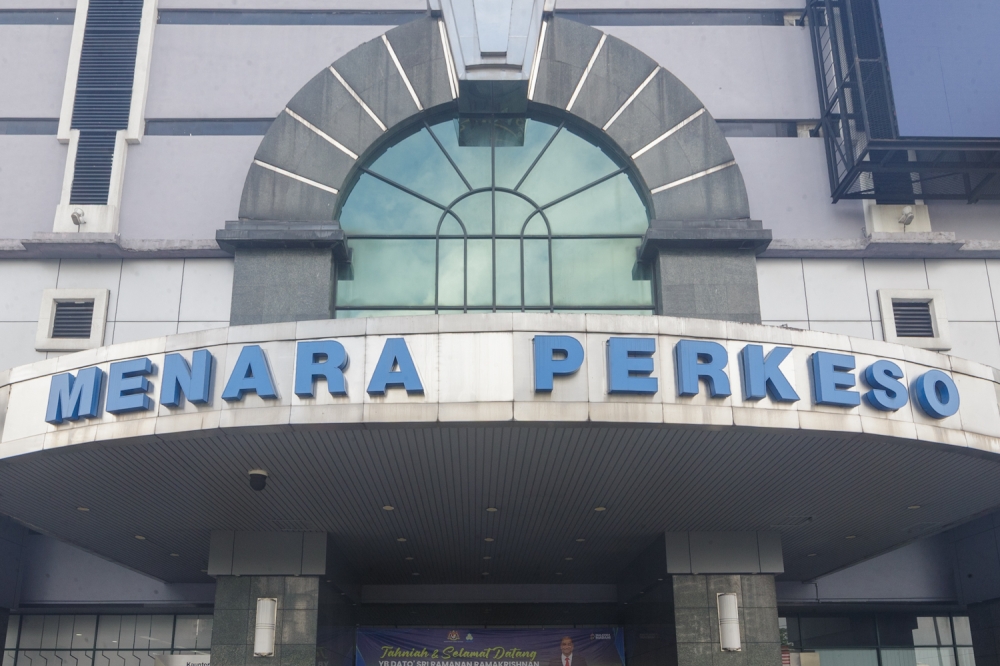
How does Socso work?
One of Socso’s main functions is to protect employees against accidents that happen while carrying out their jobs.
However, its protection is not limited to accidents inside the workplace.
Under the Employment Injury Scheme, workers may also receive protection for commuting accidents, including those occurring while travelling between their homes and workplaces, provided they follow the route without an unauthorised interruption or deviation.
This means a worker who gets involved in an accident while travelling to work may qualify for Socso benefits, subject to the scheme’s conditions.
The protection also covers accidents during work-related journeys and certain emergencies at the workplace, as well as occupational diseases arising from employment.
Depending on the circumstances, eligible workers can receive several forms of assistance:
- Medical benefits: Medical treatment at Socso panel clinics or government hospitals for employment-related injuries or occupational diseases, subject to the applicable conditions.
- Temporary disablement benefit: Financial assistance when an employee is temporarily unable to work because of an employment injury.
The daily rate is generally 80 per cent of the employee’s average assumed daily wage, subject to prescribed minimum and maximum limits.
To qualify, the employee must be on medical leave certified by a doctor for at least four days, including the day of the accident. The benefit is not payable for days when the employee works and receives wages.
- Permanent disablement benefit: Financial assistance for workers who suffer permanent disabilities resulting from employment injuries. The daily rate is generally 90 per cent of the average assumed daily wage, subject to prescribed minimum and maximum limits and medical assessment.
- Rehabilitation: Physical and vocational rehabilitation, including physiotherapy, occupational therapy, prosthetics and skills training to help injured workers return to employment where possible.
- Dependents’ benefit: Financial assistance for eligible family members if an insured employee dies as a result of an employment injury.
- Funeral benefit: Financial assistance of up to RM3,000 for eligible cases, subject to the actual funeral expenses incurred.
Socso is not simply about reimbursing medical expenses as it also provides a measure of income protection when an accident prevents someone from returning to work.
Does Socso cover a person who becomes seriously ill outside of work?
Yes, it does but under a separate scheme.
The Invalidity Scheme provides 24-hour protection to eligible employees who suffer from a permanent medical condition, whether or not it is related to their employment.
To qualify, the condition must be certified by the Medical Board or Appellate Medical Board and leave the employee unable to earn at least one-third of the customary earnings of a healthy person with comparable abilities. Employees must also meet the scheme’s contribution requirements.
For example, an employee who develops a serious medical condition outside working hours that permanently affects their ability to earn a living may qualify for assistance.
Benefits include:
- Invalidity pension: A monthly pension for eligible employees who have been medically certified as suffering from invalidity and meet the contribution requirements.
- Invalidity grant: A lump-sum payment for eligible insured individuals who do not qualify for the monthly pension but meet the relevant contribution conditions.
- Survivors’ pension: Financial assistance for eligible dependents if an insured person dies, subject to the scheme’s conditions.
- Rehabilitation: Access to certain physical rehabilitation facilities and medical assistance, including dialysis.
Note that, while the Employment Injury Scheme covers accidents and occupational diseases arising from employment, the Invalidity Scheme provides protection against qualifying invalidity regardless of whether the condition is work-related.
In other words, Socso’s protection is not confined to accidents at the office or factory.
Can Socso protect you against accidents outside of working hours?
Yes. This is where the newer Non-Employment Injury Scheme, known as Lindung 24 Jam, comes in.
Introduced on June 1, 2026, the scheme extends protection to eligible employees who suffer accidental injuries outside working hours that are unrelated to their employment.
For example, an employee who is injured while carrying out personal activities during the weekend may qualify for protection under this scheme.
The benefits include medical treatment and other disablement benefits, subject to the scheme’s eligibility requirements.
However, Lindung 24 Jam does not cover every illness or accident.
Among its exclusions are:
- Injuries caused by illnesses such as diabetes, fever and high blood pressure.
- Accidents occurring outside Malaysia.
- Injuries arising from self-employment, which fall under a separate social security scheme.
- Domestic injuries covered under the Housewives’ Social Security Scheme.
Socso’s current guidance states that participation is voluntary for local employees, while it remains mandatory for foreign workers. Contributions are fully borne by employees who participate.
For local employees, this means the Lindung 24 Jam contribution is separate from the standard employment injury and invalidity contributions.
The contribution rate is being introduced in phases:
- 0.75 per cent for the first two years.
- 1 per cent for the following three years.
- 1.25 per cent from the sixth year onwards.
Employers are responsible for deducting and remitting the contribution for participating employees.
Unlike the standard Employment Injury and Invalidity schemes, employers do not share the cost of the Lindung 24 Jam contribution.
How much are you actually paying every month?
To put this into perspective, here is how much an employee would contribute at selected salary levels.
The standard First Category contribution is shared between employers and employees, while the additional Lindung 24 Jam contribution is borne entirely by employees who participate in the scheme.
These figures follow Socso’s published Phase One contribution schedule. They exclude the Employment Insurance System (EIS), which is a separate contribution.
For local employees who do not participate in Lindung 24 Jam, the employee contribution is the standard Invalidity Scheme share shown in the table.
Employees can use Socso’s online contribution calculator to check their applicable contributions.
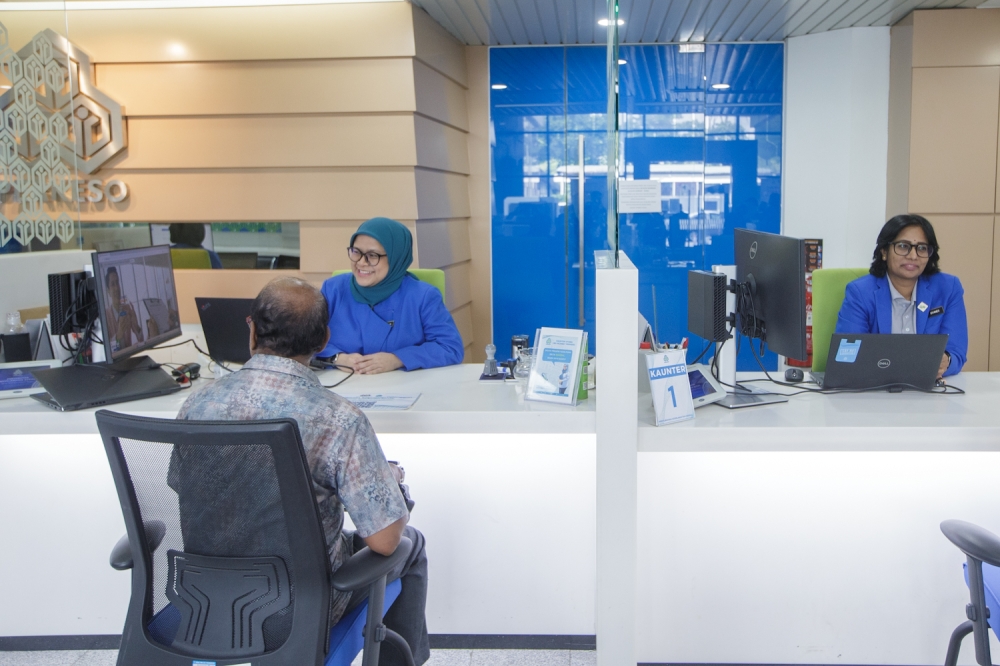
How do you make a Socso claim?
If you are involved in a workplace accident or suffer an injury while commuting to work, you should inform your employer as soon as possible.
For employment-related accidents, employers are generally responsible for reporting the incident to Socso by submitting an Accident Report, known as Borang 34.
Supporting documents include:
- A copy of the employee’s identification card.
- Medical certificates or documents relating to the injury.
- Attendance records or time cards.
- A police report, where applicable.
For commuting accidents, employees may also need to provide a police report and a sketch map showing the route taken when the accident occurred.
Claims and supporting documents can be submitted through the relevant Socso application process, including the Lindung Faedah portal for applicable notices, or at a nearby Socso office.
For workers who are unsure whether their injuries qualify for coverage, they can contact Socso directly to clarify their eligibility and the documents required.
What if an employer fails to pay Socso?
Seeing Socso deductions on your payslip does not necessarily mean your employer has actually remitted the contributions to Socso.
Employers are legally responsible for registering eligible employees and paying the required monthly contributions, including their own share.
Under the Employees’ Social Security Act 1969, employers who fail to register employees or pay contributions can face prosecution, with penalties of up to RM10,000 in fines, imprisonment of up to two years, or both upon conviction.
Employees with queries can raise the matter directly with Socso.
However, an employer’s failure to pay contributions does not automatically mean an injured employee loses all entitlement to benefits.
Under Section 48 of the Act, where an employer’s failure to pay a required contribution causes an employee or their dependents to qualify for benefits at a lower rate, Socso may pay the benefits at the rate they would have received had the contribution been made.
Socso can then recover from the employer either the difference between the benefits paid and the amount that should have been paid, or twice the amount of the unpaid contribution, whichever is greater.
The amount can be recovered as a debt owed to Socso. However, this provision does not apply to invalidity pensions.
Employees who suspect unpaid contributions should contact Socso to verify their records and benefits eligibility.
Can you claim tax relief for Socso contributions?
Yes. Budget 2027 proposes expanding tax relief to include mandatory contributions under Lindung Kendiri.
Taxpayers will also be eligible for additional tax relief of up to RM150 for qualifying voluntary contributions to Lindung 24 Jam and Lindung Kendiri.
The move is intended to encourage more self-employed individuals and employees to obtain additional social protection.
Who else benefits from the new Socso measures?
Budget 2027 also includes social protection measures for other groups.
For instance, contributions for approximately 40,000 religious personnel, including imams, bilals, tok siak, noja, marbut and takmir teachers, will be fully funded through Tabung Haji.
Separately, Socso will provide health screening vouchers for commercial vehicle drivers to help identify health risks that could affect their ability to drive safely.
These initiatives extend social protection to workers who may not necessarily fall under conventional employment arrangements.
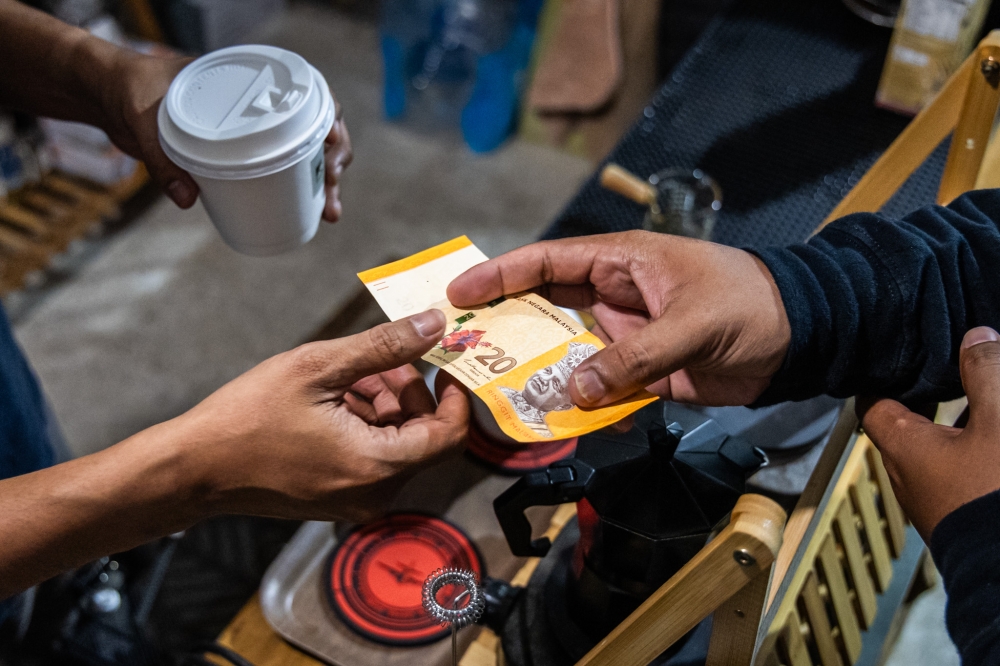
So, why should you care about that monthly deduction?
Socso contributions may appear relatively small compared with other deductions on your payslip, but the protection they provide can become particularly important when an unexpected accident or illness affects your ability to earn an income.
The important thing to remember is that Socso is not a personal savings account or a general insurance policy that automatically pays out for every accident or illness.
An employee’s eligibility to make Socso claims depends on the type of coverage, contribution record, medical assessment and eligibility conditions.
Hence, understanding what Socso covers is just as important as knowing how much is deducted from their salaries each month.





 English (US) ·