.png)
 3 hours ago
2
3 hours ago
2

Malaysians repaid over RM23 billion worth of credit card debt as of December 2025, a record rate underpinning the growing concern about the country’s high level of household debt that has reached 85 per cent of GDP. — Reuters pic
(New users only) It's tax relief season! Get up to RM300 when you save with Versa! Plus, enjoy an additional FREE RM10 when you sign up using code VERSAMM10 with a min. cash-in of RM100 today. T&Cs apply.
By Syed Jaymal Zahiid
Thursday, 23 Apr 2026 8:30 PM MYT
KUALA LUMPUR, April 23 — Malaysians repaid over RM23 billion worth of credit card debt as of December 2025, a record rate underpinning the growing concern about the country’s high level of household debt that has reached 85 per cent of GDP.
Data published on the Department of Statistics Malaysia’s OpenDOSM website showed debt from credit card repayment reached RM23.67 billion by December 2025 before dropping to RM23.38 billion by the first month of 2026.
Meanwhile, credit disbursed through credit cards reached a peak of RM24 billion at the end of 2025.
It’s unclear how much of the debt repayment goes to Buy-Now-Pay-Later (BNPL) companies, which have exploded over the last five years.
BNPL services often overlap with credit card usage, though many also extend credit independently.

Buy-now-pay-later (BNPL) apps previously approved in Malaysia, as seen on an iPhone in Shah Alam June 23, 2022. BNPL services often overlap with credit card usage, though many also extend credit independently. — Picture by Yusof Mat Isa
Malaysia has the second‑highest household debt‑to‑GDP ratio after Thailand, although Bank Negara Malaysia said the level of household borrowings remains manageable with little risk exposure to the financial system, since a large chunk of the debt is house loans.
Officials rarely explain the trend in rising credit card debt, but analysts generally believe it stems from the rise in living costs and the aspiration for a higher standard of living, especially among urban populations.
“Combined with stagnant wages, this has compelled many to rely on credit for essential and discretionary spending. Inflation and corresponding high prices have Malaysians grappling with ever-increasing costs of living,” researchers at Taylors University wrote.
“The Household Expenditure Survey published by the DOSM revealed that, on average, Malaysians spend RM229 per month on communications, representing a 950 per cent increase from RM24 in 1993,” they added.
Meanwhile, spending on housing, water, electricity and gas has increased by 440 per cent, from RM245 per month in 1993 to RM1,068 per month in 2019.
Spending on groceries and eating in restaurants have risen by 280 per cent and 440 per cent, respectively, the same researchers noted.
Overall, spending has roughly quadrupled since 1993, from RM1,161 to RM4,534 per month, while the median income has only slightly increased from RM1,500 to RM2,062 from 2010 to 2020.
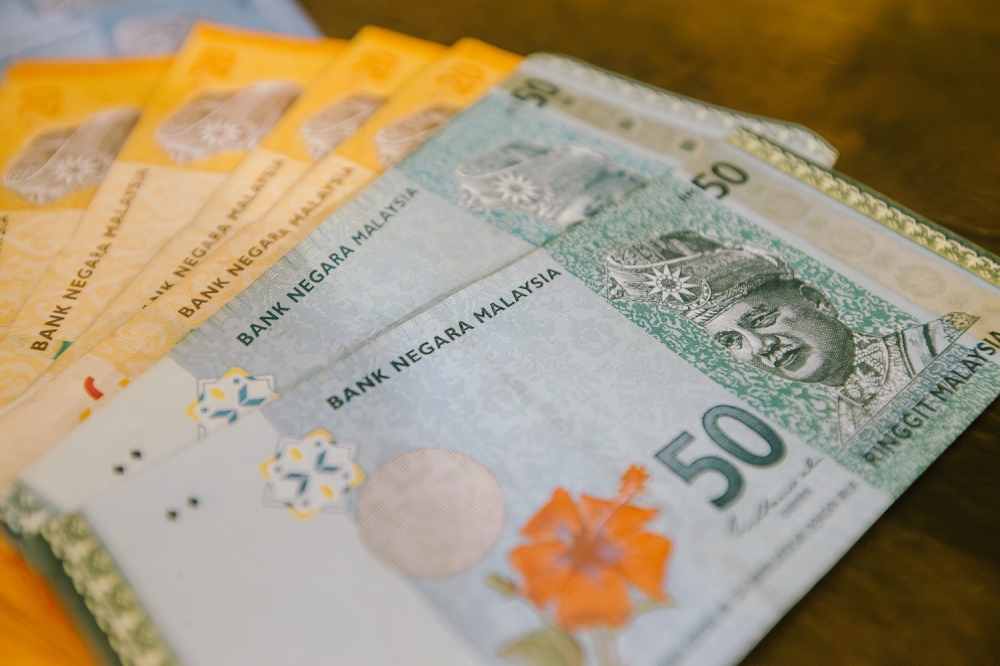
Overall, spending has roughly quadrupled since 1993, from RM1,161 to RM4,534 per month, while the median income has only slightly increased from RM1,500 to RM2,062 from 2010 to 2020. — Picture by Raymond Manuel
At the heart of the rising credit are stagnant wages, analysts have said.
Today’s generation enters the employment market with salaries that have yet to keep up with the ever-increasing costs of living.
A study by TransUnion, an international credit reporting agency, found that 84 per cent of the world’s Gen Z consumers had at least one credit card as of the fourth quarter of 2023, compared to 61 per cent of Millennial consumers a decade earlier.








 English (US) ·