.png)
 2 hours ago
2
2 hours ago
2

Past president of the Malaysian Bar Karen Cheah Yee Lynn speaks at a forum discussing the separation of powers between the Attorney General and Public Prosecutor in Kuala Lumpur on April 20, 2026. — Picture by Raymond Manuel
(New users only) It's tax relief season! Get up to RM300 when you save with Versa! Plus, enjoy an additional FREE RM10 when you sign up using code VERSAMM10 with a min. cash-in of RM100 today. T&Cs apply.
By Ida Lim
Thursday, 23 Apr 2026 7:00 AM MYT
KUALA LUMPUR, April 23 — Malaysia will need to create an OPPA, instead of just stopping at changing the Federal Constitution to separate the roles of the attorney general (AG) and public prosecutor (PP), former Malaysian Bar president Karen Cheah said.
And no, this is not the oppa that K-pop or K-drama fans in Malaysia are already familiar with.
Cheah said the Malaysian Bar had suggested that the government introduce an “enabling” law called OPPA to spell out the finer details on the new PP role.
“One of the things we proposed to the PSSC is this Korean term of endearment called OPPA, which means Office of the Public Prosecutor Act, that is the legislation that we need. We need that legislation to go hand in hand with the Bill,” she said at a Malaysian Bar forum on Monday.
The Malaysian government is currently pursuing one of the country’s biggest legal reforms in history, by proposing to amend the Federal Constitution to split the AG and PP roles.
Currently, a 12-member bipartisan parliamentary special select committee (PSSC) is studying ways to improve this Bill.
The proposed Bill contains some safeguards to protect the PP – who will have the power to decide whether to charge or drop charges – from simply being fired or sacked.
Here’s what the proposed Bill says on how someone can lose their job as the PP: Reasons to remove a PP include “misconduct”; a tribunal would consider whether a PP should be removed; and the Yang di-Pertuan Agong would remove the PP if the tribunal recommends it.
But Cheah said the Malaysian Bar disagrees with the word “misconduct”, and instead recommended that a new enabling law make a Code of Conduct legally-binding on the PP.
“And if there is an enabling legislation and you spell out what is the Code of Conduct that is expected of the PP within the enabling legislation, then instead of using the word ‘misconduct’ in the Constitution, you talk about if there’s any breach of any Code of Conduct.
“And then in order to give effect to that, you have that legislation in order for you to fall back on,” she said.
She said Malaysia needs a law like OPPA to spell out the mechanism to remove a PP, how the tribunal would be established and who would sit on the tribunal, and who can petition for a PP’s removal and the grounds for the petition.
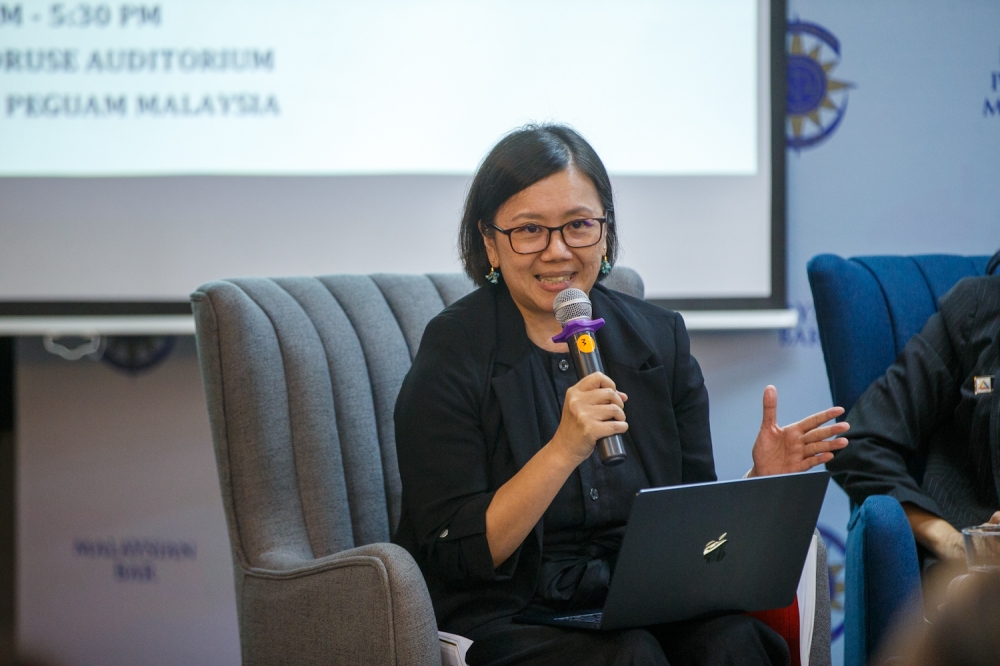
Projek SAMA Convener Ngeow Chow Ying speaks at a forum discussing the separation of powers between the Attorney General and Public Prosecutor in Kuala Lumpur on April 20, 2026. — Picture by Raymond Manuel
Having a PP in Malaysia that is accountable and transparent, not just independent
At the same forum, civil society group Projek SAMA convener Ngeow Chow Ying also said Malaysia should have an enabling law on the PP, noting that the UK, Canada and Australia also have such laws.
She said Malaysia does need to amend the Federal Constitution to establish the office of the PP and its core powers, while the enabling Act would cover all the details to make this work — the PP’s appointment process, tenure rules, code of ethics, and the PP’s accountability to Parliament.
“And that is the very crucial piece of legislation we want to push the government to undertake in the shortest time,” the lawyer said of the enabling Act.
Ngeow said there should be a Prosecution Code of Conduct, as well as published guidelines – including for how the PP decides whether to charge or not – that should bind all public prosecutors.
While the Malaysian government’s aim in separating the AG’s and PP’s roles is to ensure that the prosecution’s decisions are seen as independent from political influence, Ngeow said such independence must come with accountability to Parliament.
Ngeow said the PP should not only be accountable, but should also be transparent by making information available to the public.
“We are not speaking this in a vacuum but looking at other countries that do the same thing as well,” Ngeow said, referring to the UK, Canada, Australia as countries that already implement these accountability and transparency measures for their prosecution.
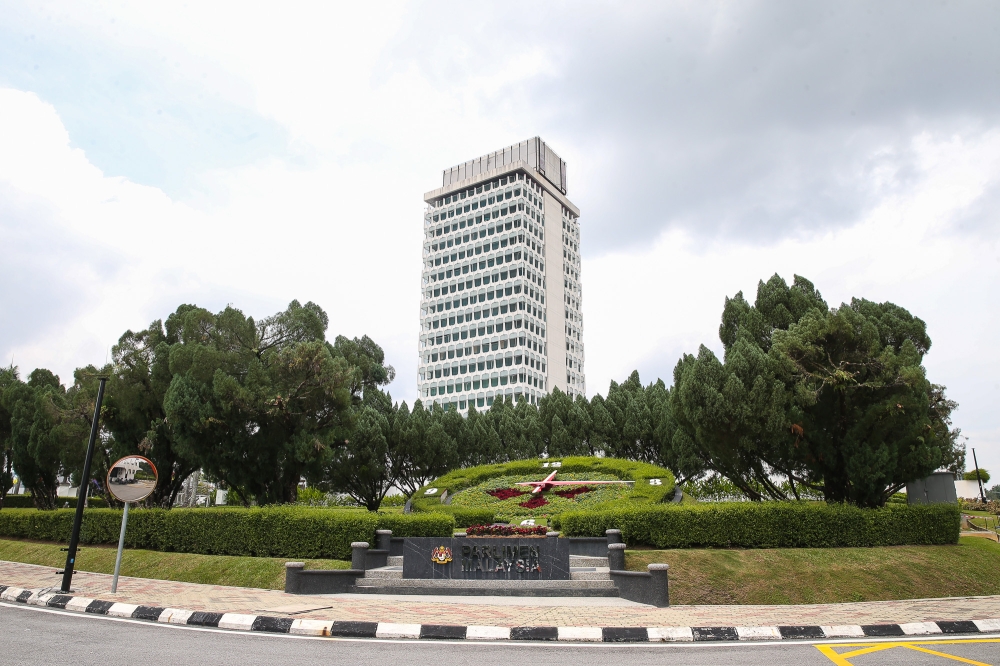
The Parliament building in Kuala Lumpur. — Picture by Yusof Isa
Let Parliament have a role in appointing Malaysia’s PP, just like in other countries
During the forum, independent policy strategy consultant and former lawyer Maha Balakrishnan proposed that Parliament be given a role in the process to appoint the PP, saying that this is not a “new” or “novel” idea.
She said many countries have already included Parliament in their process of appointing prosecutors, including Canada, Germany, Switzerland and Chile which rank high on global rankings for rule of law.
Addressing the idea that involving Parliament would risk politicising the PP’s appointment process, Maha said: “Well, no, we say not necessarily, because there are ways in which you can control the role of Parliament.”
Maha explained that civil society is suggesting that Parliament be given a “very limited role” by having only a “veto power” on potential PP candidates.
Under this proposal, she said the selection committee would share PP candidates’ names with Parliament, and Parliament would filter through the list and, for example, reduce a list of three names to just one name.
“It has no opportunity to suggest its own name or its own candidate, and then one name then goes up to the Yang di-Pertuan Agong for appointment.
“By doing so, you ensure there’s transparency, but you also ensure that the first committee is doing the right job, doing the job the way it’s supposed to do it, taking qualifications into consideration.
“And we also make transparent the name that is going up,” said Maha, who is also a research fellow at the United Nations Sustainable Development Solutions Network-Asia Headquarters at Sunway University, Malaysia.
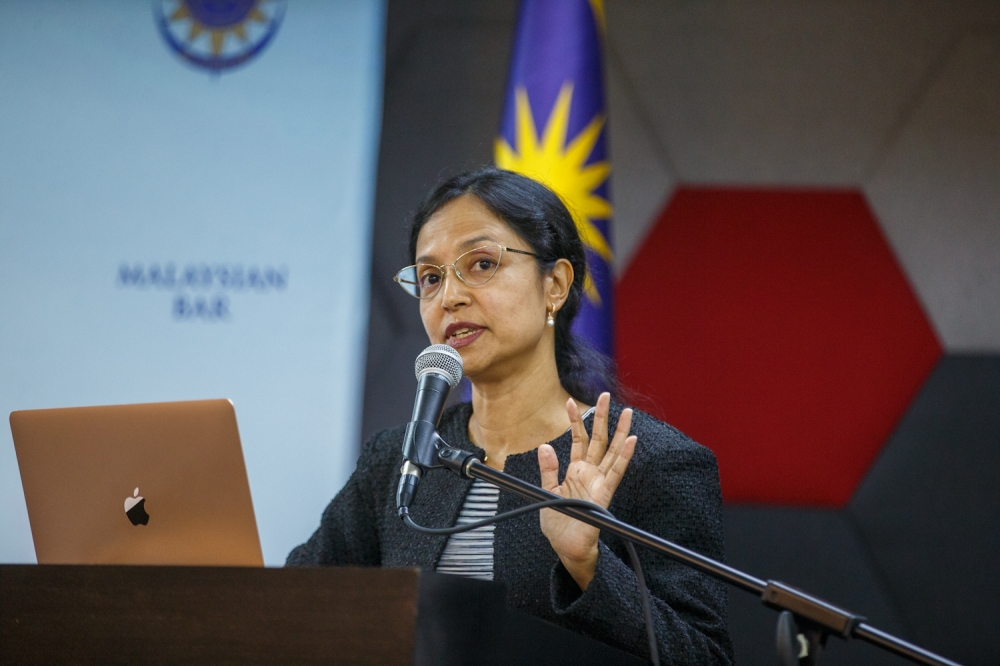
Independent Policy Strategy Consultant and UN Research Fellow Maha Balakrishnan speaks at a forum discussing the separation of powers between the Attorney General and Public Prosecutor in Kuala Lumpur on April 20, 2026. —Picture by Raymond Manuel
Maha also highlighted that the government’s proposed Bill says that a PP’s term of office is seven years, but that the Bill does not state a retirement age for the PP (unlike judges) or stop a PP from applying again for the same position.
“So it’s entirely foreseeable a young public prosecutor – age 40, appointed – could continue and continue and continue and continue. And it wouldn’t be unconstitutional,” she said, having earlier said that Malaysia should instead have a “definitive and finite period” for how long a person can be a PP.
The forum titled “Separating the Powers of the Attorney General and Public Prosecutor: Does the Bill deliver independence, accountability and the rule of law?” also featured Human Rights Commission of Malaysia commissioner and former deputy public prosecutor Melissa Akhir and Muar MP Syed Saddiq Abdul Rahman as speakers, and was moderated by the Bar Council’s Civil Law and Law Reform Committee co-deputy chair Anishaa Sundramoorthy.
Last Thursday, the AG-PP split Bill PSSC chaired by Law Minister Datuk Seri Azalina Othman Said held its third meeting, which was attended by Bersih, Suhakam, the Malaysian Bar, the Sabah Law Society, the Advocates Association of Sarawak, Projek SAMA, Transparency International and Rasuah Busters.
The PSSC is reportedly working on finding a “middle ground” for the proposed separation of the AG and PP roles, with the aim of bringing the Bill to Parliament in June for MPs to vote on.







 English (US) ·