.png)
 1 hour ago
2
1 hour ago
2

How do you know if you are hopping on to a licensed tour van or tour bus? It will have the government-required words “BAS PERSIARAN” and the colour coniferous green on one-third of the vehicle’s body.— Picture by Choo Choy May
(New users only) Unlock 5.5%* + 10%* p.a. promo rate for 3 months via Versa and enjoy FREE RM10 & when you sign up using code VERSAMM10 with min. cash of RM100 today! T&Cs apply.
Thursday, 16 Apr 2026 7:00 AM MYT
KUALA LUMPUR, April 16 — So what exactly is a kereta sapu?
This is when drivers of private cars or vans illegally offer to drive you around for a spot of sightseeing in Malaysia, at cheaper prices than licensed tour vans and tour buses.
Malaysian Tour Van Drivers Association (PVPM) chairman Simon Sim said such illegal tour services are threatening the livelihood of licensed tour transport operators.
Unlike licensed tour transport operators who face higher operating costs, strict regulations and no diesel subsidies, Sim said private vehicle owners and even e-hailing drivers can benefit from their Budi95 petrol subsidies to offer cheaper prices to tourists.
Sim said e-hailing vehicles are only supposed to bring passengers from point to point and pick up passengers through bookings made on the app.
But he said some e-hailing drivers would allegedly make private arrangements with their customers for day tours such as to Genting Highlands and Melaka, despite not having the necessary permits.
Sim said tour buses and tour vans are legally required to have licensed tour guides when there are more than seven local tourists or when there is just one foreign tourist, which drives up operating costs.
With tour guide services costing around RM300 per day, Sim said tourists who do not want to pay for this may shift to kereta sapu or e-hailing vehicles that are not bound by the same rule.
He told Malay Mail that this creates a clear imbalance: “Tour buses that are legitimate bear higher compliance costs but are not eligible for diesel subsidies; while e-hailing services and illegal vehicles enjoy subsidy benefits, creating a situation where ‘citizens who obey the law lose out’.”
Sim said those providing illegal tourism transport services using their private vehicles only have to pay the monthly bank instalments for their vehicles.
On top of competition from unlicensed rivals, Sim said tour vans also face additional challenges with the recent increase in diesel prices, resulting in higher costs and higher rates which again could push tourists to use kereta sapu.
Sim hopes for more enforcement by the authorities including the Road Transport Department to nab those who operate kereta sapu and offer tours illegally.
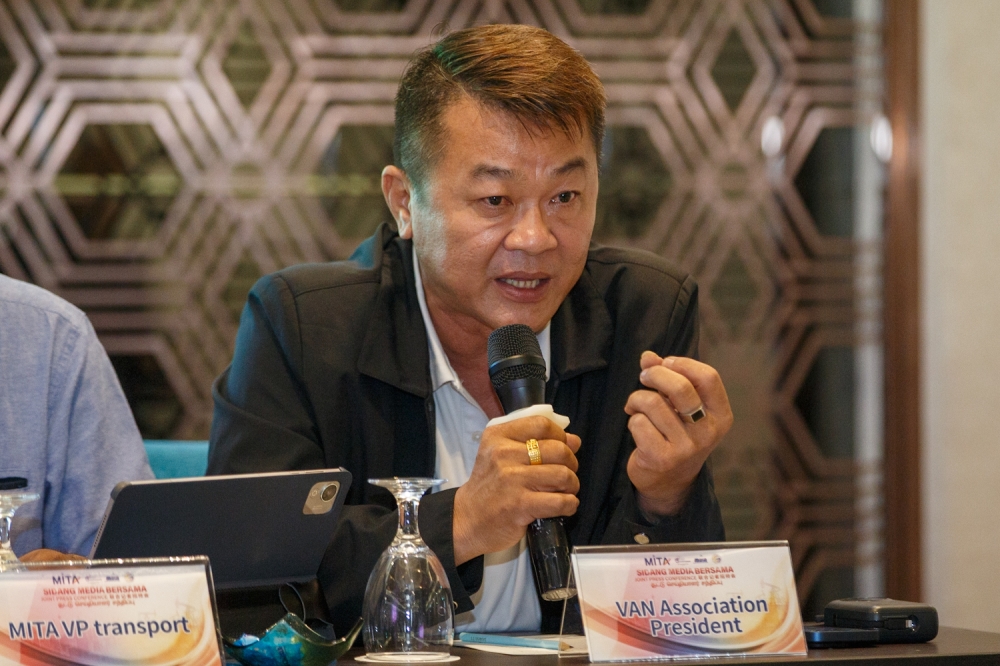
Malaysian Tour Van Drivers Association (PVPM) chairman Simon Sim said the ‘kereta sapu’ problem has been around for many years.—Picture by Raymond Manuel
What are some of the higher costs that tour vans face?
In Malaysia, tour vans with up to 18 seats and tour buses with up to 45 seats both come under the same licensing category of bas persiaran (tour buses).
Sim explained the lengthy process and requirements that a tour van operator would have to go through before he can start transporting tourists around.
This includes setting up a company; having an office space; applying for a tourism licence (KPL) from the Ministry of Tourism, Arts and Culture (Motac); applying for a permit from the Land Public Transport Agency (APAD); sending the vehicle to Puspakom for inspection; submitting the vehicle inspection report to the Road Transport Department (RTD) and getting a road tax.
He listed examples of the extra costs that a tour van operator would face:
- Applying for KPL licence and renewals;
- A PSV licence (which could add up to RM200 in costs), on top of the usual driving licence;
- Industrial Code Of Practice (ICOP) safety training as part of APAD permit requirements: Around RM300;
- APAD permit: Around RM110 per year;
- Puspakom inspection (around RM50) once every six months;
- Higher insurance costs than a private vehicle, as tour vans also buy insurance coverage for their passengers (For example, a new tour vehicle’s insurance could be RM5,000 to RM6,000 while a new private vehicle’s insurance could cost around RM4,000);
- Requirement to have licensed tour guides (can be RM300 per day, to be paid by tourists); which can result in hefty fines or jail for non-compliance.
He said having a KPL is critical, as a tourism vehicle operator would not be able to obtain the APAD permit and road tax without a KPL.
Having been trained under APAD’s ICOP course, Sim said tour van drivers would check the vehicle’s conditions including its tyres, and there would be record of details such as how far a driver is driving and where the vehicle would travel to for the day.
Based on information available on APAD’s website, licence conditions for bas persiaran include preparing an itinerary of the places to be visited and a list of passengers’ names together with their identity card numbers or passport details for every trip.
The licence conditions also stipulate multiple safety requirements, such as not picking up and dropping off passengers at areas that would endanger them or other road users.
Also required is a Motac-licensed tour guide for every trip, unless Motac had given exemptions.
Based on information provided by Sim, an 2009 Motac circular exempts tour guides for tour vans, if it involves transfers between airports and hotels or hospitals; dinner or lunch transfers from hotels to related destinations; shopping activities or for entertainment, recreation, sports, conventions, cultural, religious, training purposes; and transfers to eco tourism sites.
The same 2009 circular states that licensed tour guides are mandatory for sightseeing trips and visits to places of interest, even if a tour van only carries seven passengers and below.
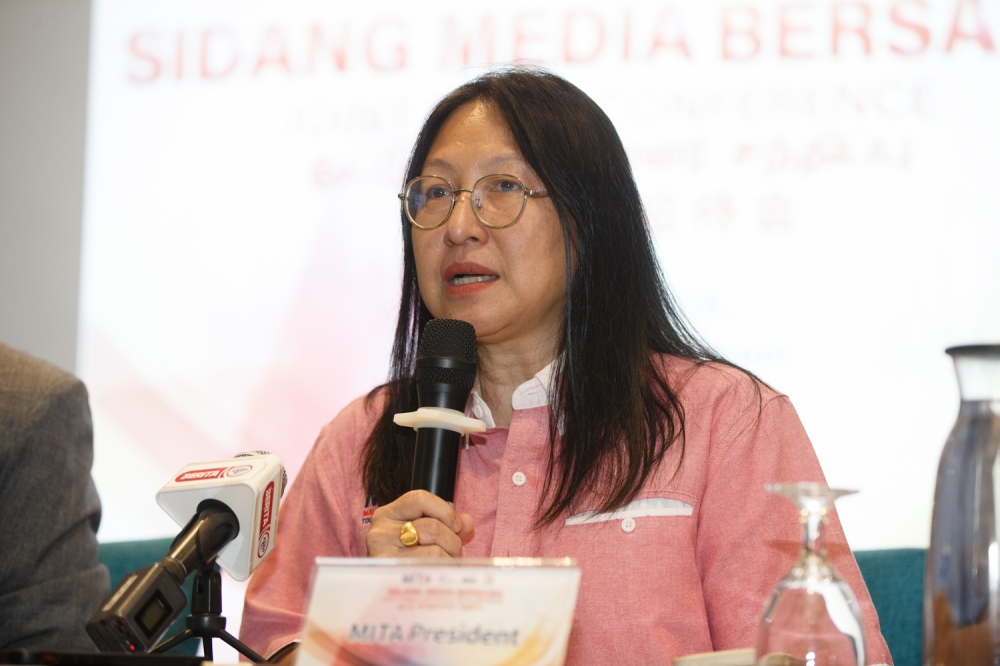
Malaysian Inbound Tourism Association (MITA) president Mint Leong said overcoming the ‘kereta sapu’ problem could result in business actually going to legitimate local tourism operators.—Picture by Raymond Manuel
Malaysian Inbound Tourism Association (MITA) president Mint Leong also recently highlighted the problem of kereta sapu.
She said some foreign operators bring tourists into Malaysia and put them on express buses (which do receive fuel subsidies from the government) to travel from Kuala Lumpur to Penang for example, with kereta sapu then picking them up at the bus station to head to the hotel.
The next day, these kereta sapu — which as personal vehicles do receive fuel subsidies — would then pick up the tourists to tour around, with the tourists then later taking the train or express buses back to the airport.
“So this has happened and is happening. If we have a better way to overcome this, the illegal profits will go back into the pockets of travel agencies or bus and van operators who are legitimate and have permits,” she said, urging for better enforcement against illegal operators.
At the same time, Leong proposed tax rebates for licensed tour agencies — which are the ones holding the permits for licensed tour buses and tour vans — as a quicker way to provide financial relief.
She said this could help weed out ulat or touts and illegal operators, by ensuring that the tax rebates would only go to licensed tour transport operators.
MITA also recently urged the government to provide monthly quotas for diesel subsidies to tourism transport operators, namely 3,000 litres (tour buses) and 2,500 litres (tour vans).
Sim said the idea that “tour buses provide services to tourists” should not be used to exclude tourism transport operators from receiving diesel subsidies, noting that they offer services to both local and foreign tourists and play an important role in Malaysia’s tourism industry.
He pointed out that other transport providers such as e-hailing platforms and public transport providers — which receive subsidies — impose the same fares to passengers regardless of whether they are locals or foreigners.
Last Wednesday, the Ministry of Tourism, Arts and Culture (Motac) said it is in talks with the Finance Ministry to explore whether it is feasible to introduce tax rebates for the tourism transport sector, and urged industry players to submit complete and verifiable operational and financial data to enable targeted support measures.





 English (US) ·