.png)
 5 months ago
47
5 months ago
47
Mar-a-Lago has become one of Florida’s buzziest mansions since President Donald Trump purchased the sprawling 62,500-square-foot estate and private club in 1985. Every time the president visits, the cameras follow.
But what’s gotten less attention is the luxury real estate market quietly reshaping itself around him.
As of early March, South Ocean Boulevard, the oceanfront road that runs past Mar-a-Lago and threads through the most expensive zip code in Florida, has been closed indefinitely between South County Road and Southern Boulevard due to security concerns stemming from the Iran war.
The town of Palm Beach announced the shutdown after the U.S. and Israel launched joint strikes on Iran, prompting the Palm Beach County Sheriff’s Office to implement “enhanced security measures” in coordination with the U.S. Secret Service. The closure also follows a Feb. 22 incident in which a 21-year-old armed man, Austin Tucker Martin, was shot and killed by Secret Service agents and a Palm Beach County deputy after entering the Mar-a-Lago perimeter carrying a shotgun and gas canister. Trump was not at Mar-a-Lago at the time. Typically if the president were to visit Mar-a-Lago, the closure would be lifted as soon as his motorcade left town, but this one doesn’t have an end date.
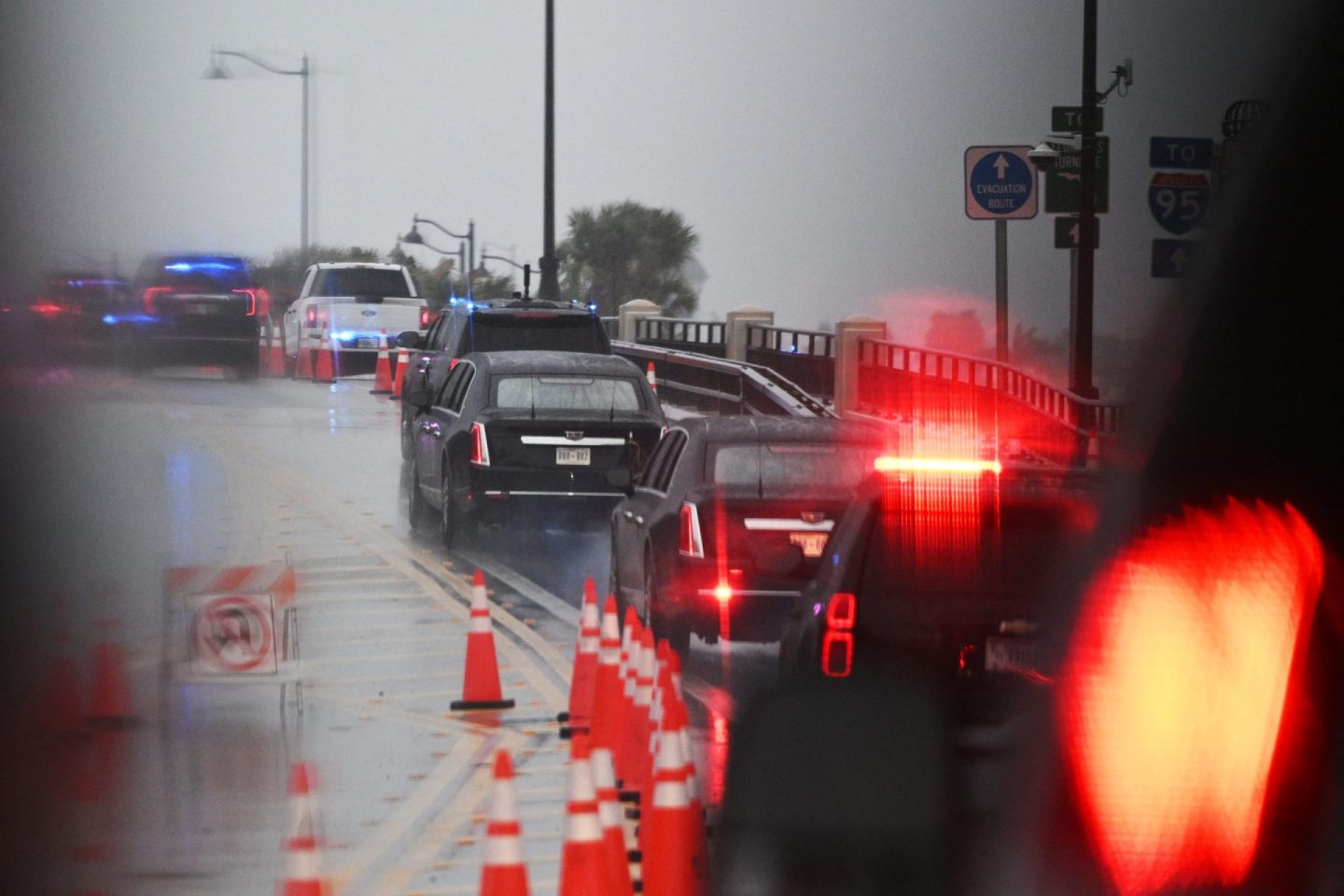
Getty Images—Mandel NGAN / AFP
South Ocean Boulevard also happens to be the main drag of Billionaires’ Beach, the stretch of oceanfront properties where the likes of Citadel founder Ken Griffin, Blackstone CEO, Stephen Schwarzman, Fidelity Investments CEO Abigail Johnson, and more live. Reports show Palm Beach is home to roughly 60-70 billionaires, and listings along the corridor routinely cross $50 million—and Zillow shows several estates currently listed well over $200 million.
That makes Palm Beach one of the most exclusive neighborhoods in the U.S., along with Beverly Hills and Billionaires’ Row in Manhattan. But what’s intriguing is that road closures that would typically be an annoyance to residents have actually made people view the added security measures as a feature.
“What used to be a temporary inconvenience has now become part of the infrastructure of doing business here,” Jessica Julian, a Palm Beach–based luxury agent active across the island, told Fortune. “When a major corridor like South Ocean is closed indefinitely, it changes how buyers experience the island, but it also reinforces just how controlled and protected this market really is.”
West Palm Beach’s booming luxury real estate market
The Palm Beach luxury market is hot. The town of Palm Beach has produced the highest five-year home value appreciation of any major Florida market at a 118.2% increase during the past five years, according to data published by The Koolik Group on April 2. The average home price is now roughly $9.8 million, the report shows, and nearly 70% of all single-family transactions on the island closed above $10 million.
“The buyers we’re seeing in Palm Beach today are highly motivated, many are paying all cash,” Julian said.
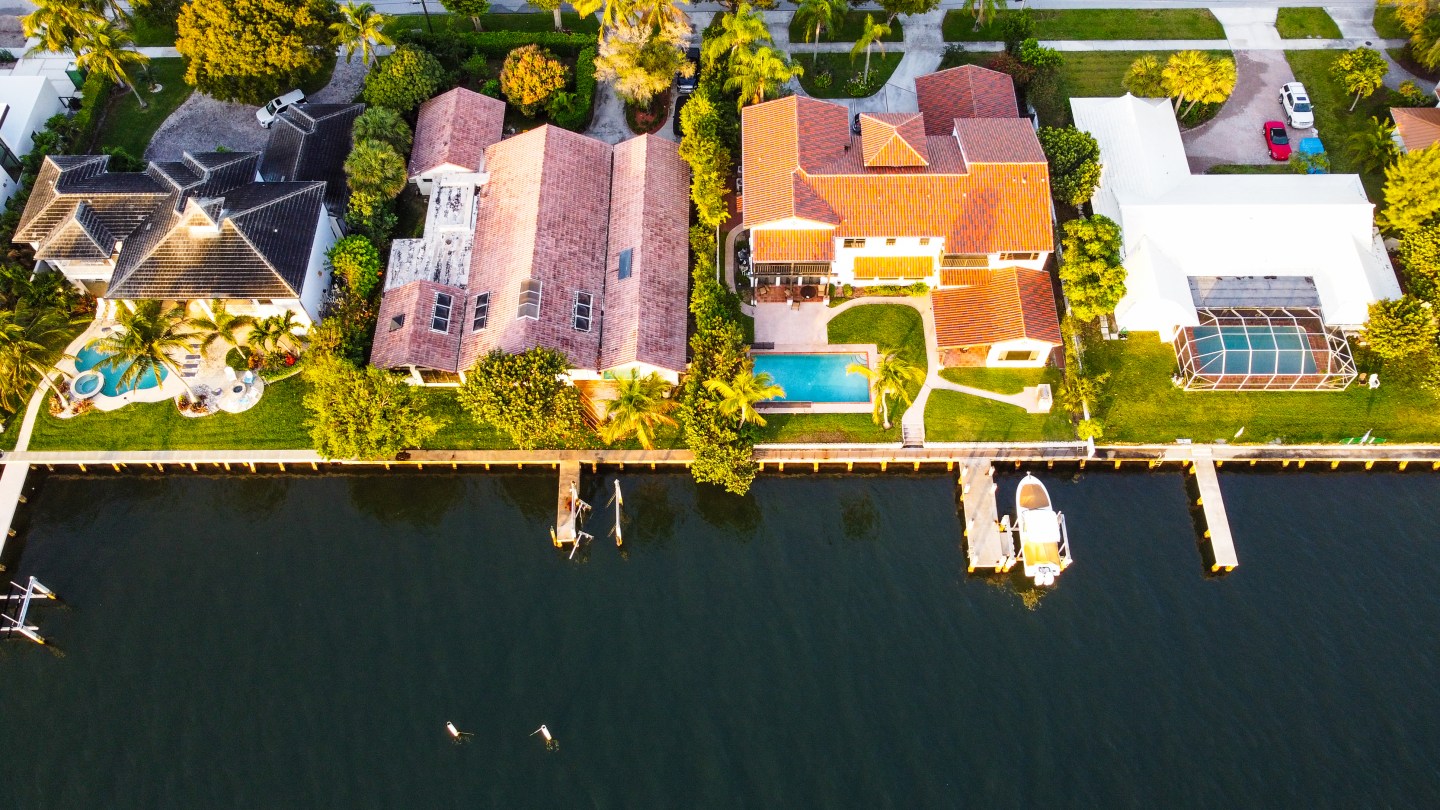
Getty Images
And specifically in West Palm Beach, luxury pending sales rose 30% year-over-year in January, marking one of the largest jumps among the 50 most populous U.S. metros. Properties are also moving much more quickly: the average time on market dropped from 95 days to 85 days, according to Redfin data.
“West Palm Beach has become so popular that a $1 million home is no longer considered high end,” Elena Fleck, a Redfin Premier real estate agent based in Palm Beach, said in a statement. “In a lot of U.S. cities, homes under $500,000 are the most sought after, but in West Palm Beach, updated homes just over $1 million are a hot commodity because we have so many wealthy cash buyers coming in from out of state.”
West Palm Beach is only becoming more exclusive
So between the booming luxury market there and the road closures, Julian’s job—and the exclusivity of buying a home in West Palm Beach—has changed.
“Showings are more strategic than ever,” she said. “We are clustering appointments, adjusting timing to work around access points, and often pre-vetting buyers before they even step onto a property. There is very little room now for casual traffic.”
The pre-vetting process, in practice, looks like virtual previews, FaceTime walkthroughs, and detailed property packages sent before a client ever boards a plane to visit the home, Julian said. So by the time the buyer lands, the shortlist of properties they can see is down to one or two homes, not 10, and they’re more prepared to make a decision.
Julian gave the example of a recent showing in which an out-of-state, all-cash client flew in for the day. They hit the security checkpoint and got delayed briefly.
“Instead of it being a friction point, my client actually turned to me and said ‘I like this,’” Julian recalls. “That moment told me everything—the people who belong here see the security as a feature, not an inconvenience. It signals that not everyone can just drive through. And for that buyer, that’s exactly the point.”
That self-selection is reshaping the buyer pool.
“When access tightens, the buyer pool becomes more intentional,” Julian said. “In Palm Beach, that actually works in favor of sellers because the people coming through are serious, qualified, and ready to transact.”
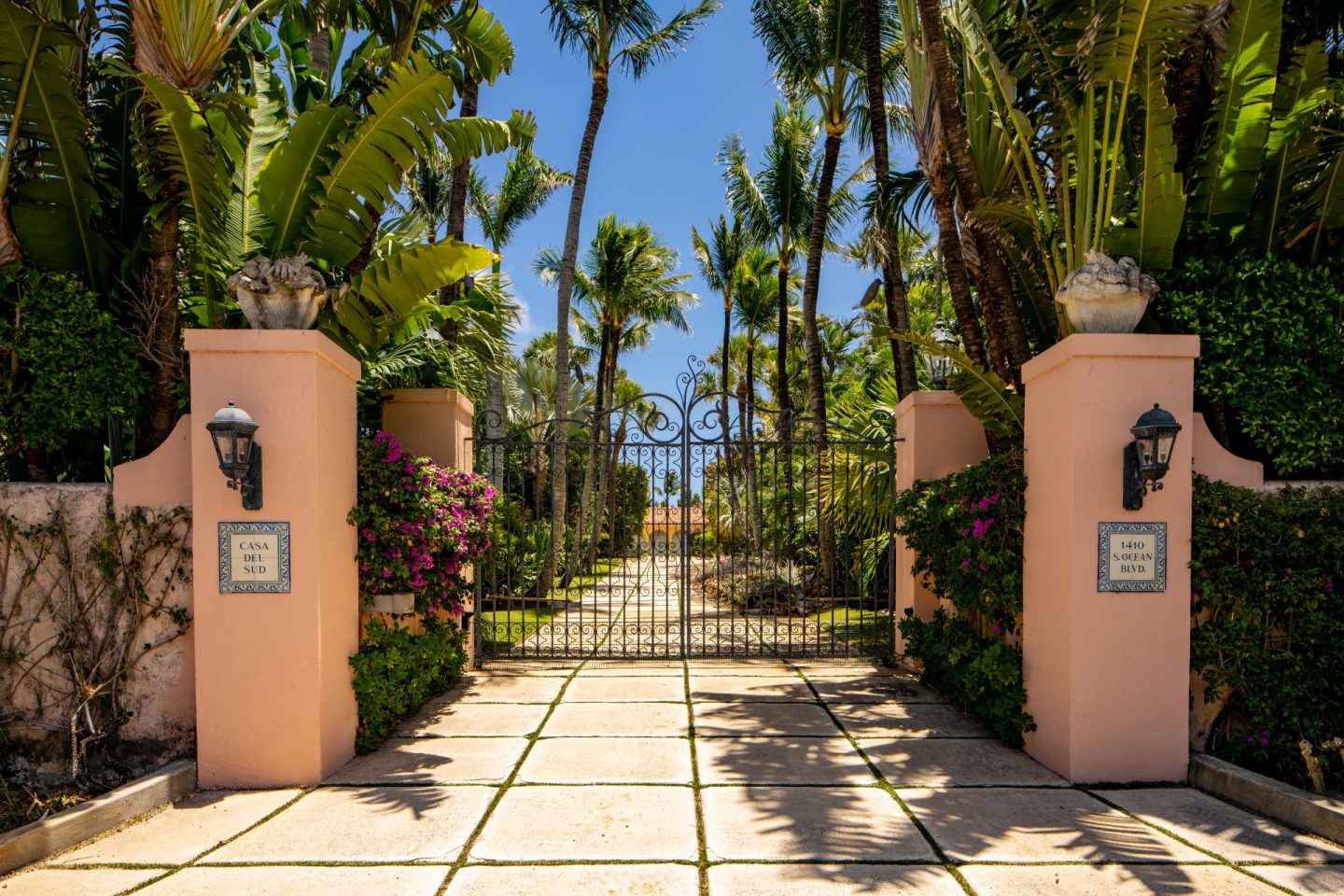
Getty Images
And for homes at the $20-million-plus price mark, she said, conversations have shifted away from architecture and ocean access to logistics. More buyers are asking questions like how long it would take them to reach a private airport, the impact during peak security windows, and whether staff and vendors can still access their home.
To be sure, none of this is entirely new. Palm Beach has been exclusive for a long time, and many real-estate transactions happen off-market. Ultrawealthy buyers increasingly bypass the open market, instead joining developers’ private waitlists months or years in advance before a home even breaks ground.
Meanwhile, Florida’s lack of state income tax and West Palm Beach’s emergence as “Wall Street South” has pulled in more wealth buyers, hedge funds, and family offices whose executives want to live on the island itself.
“Palm Beach has always been built on scarcity,” Julian said. “The land is finite, the inventory is tight, and access has never been handed out freely.”
“What we’re seeing now isn’t a departure from that, it’s just the next chapter,” she continued. “The difference today is that agents aren’t simply marketing exclusivity anymore—they’re actively managing it in real time.”
For ultra-high-net-worth buyers, she said, the federal security presence aligns almost perfectly with what buyers were already paying for: “privacy, discretion, and a sense of insulation from the outside world.”







 English (US) ·