.png)
 2 hours ago
1
2 hours ago
1
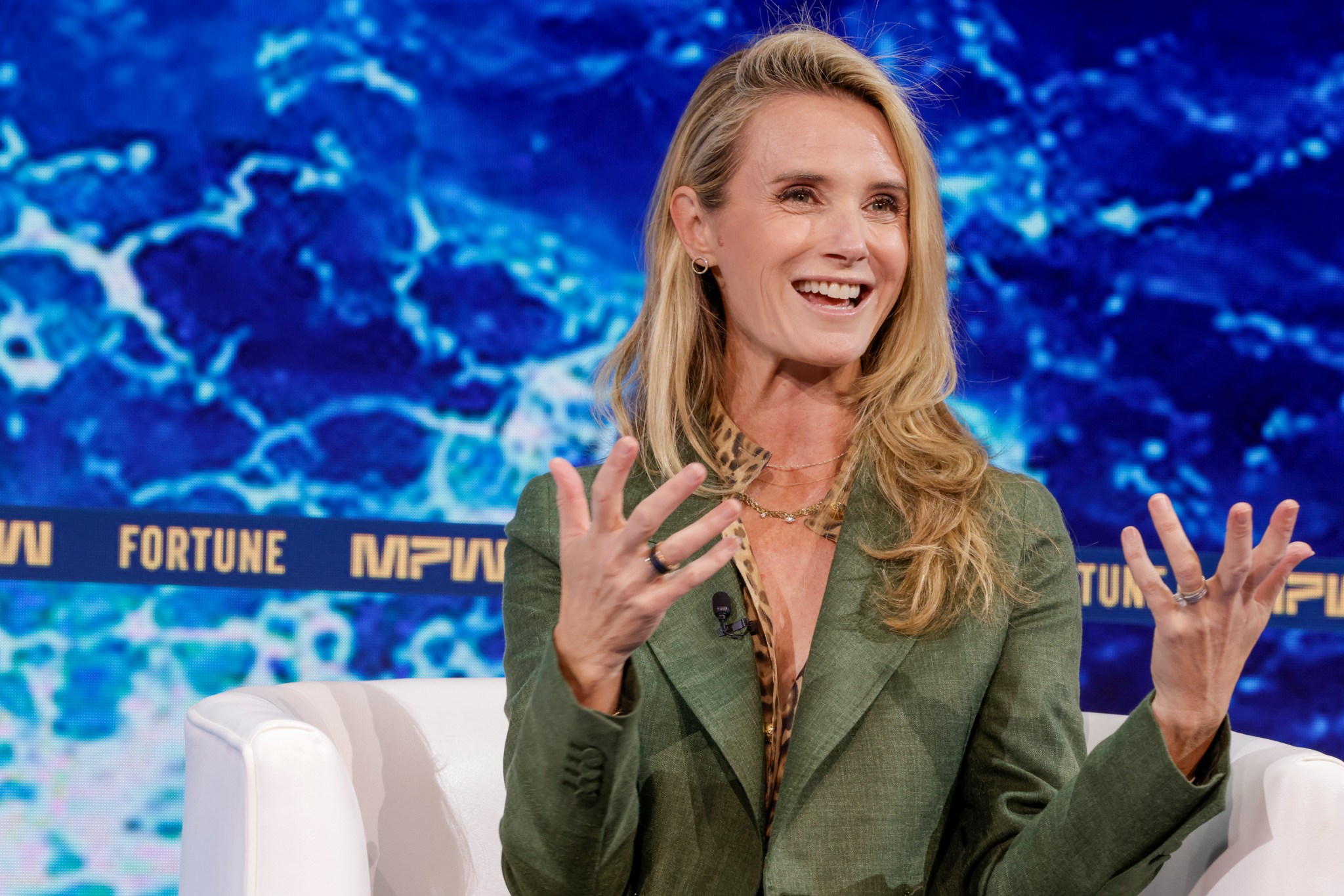
Hello from Santa Barbara. It’s day two of the Fortune Most Powerful Women Summit.
I sat down with Sarah London, CEO of Centene, on Monday. She offered her perspective on health care’s AI boom. Much of the AI being deployed at scale today, London said, goes toward what she calls “inflationary use cases,” tools that generate more revenue in a fee-for-service system rather than reduce the underlying cost of care.
AI can make billing faster, automate paperwork and help providers capture more revenue. But those gains don’t necessarily make health care less expensive. London believes the bigger opportunity lies in changing how care is delivered and who can access it.
Centene, a $33 billion company operating Medicaid plans in 29 states alongside marketplace and Medicare Advantage coverage, serves 26 million members. They are, London said, “among the poorest, sickest” people in their communities.
Yet those populations are often left behind by health care innovation. London sees two opportunities for AI to change that.
The first is moving care into the community. In rural areas where medical services are scarce, AI could help community health workers triage non-acute problems locally, potentially avoiding emergency room visits.
The second is giving patients more control over their care. Interactive tools could help people navigate initial decisions about a health concern without making every next step dependent on a clinician visit.
“That’s actually how you bend the cost curve,” London said.
That vision doesn’t make administrative automation irrelevant; it sharpens the financial case for it.“Every dollar that we can save in the administration of health care, we can apply to benefits,” London said.
For health care CFOs, the challenge is distinguishing between an AI tool that speeds up billing and one that helps patients get the right care in the right setting—potentially changing the economics of care itself.
The question isn’t just how much AI can help health care do. It’s whether it can help health care spend less to deliver better care.
You can watch a video of my discussion with London at the MPW Summit here.
Sheryl Estrada
Sheryl.Estrada@fortune.com
This story was originally featured on Fortune.com







 English (US) ·